While summer is a time for holidays, our FAIR2Adapt work didn’t slow down. From demonstrating cross-domain reuse of FAIR infrastructure to co-designing AI tools with the global climate change adaptation community, we had an active few months, and September brought two significant opportunities to share that work with the wider research community.
Demonstrating FAIR infrastructure in action
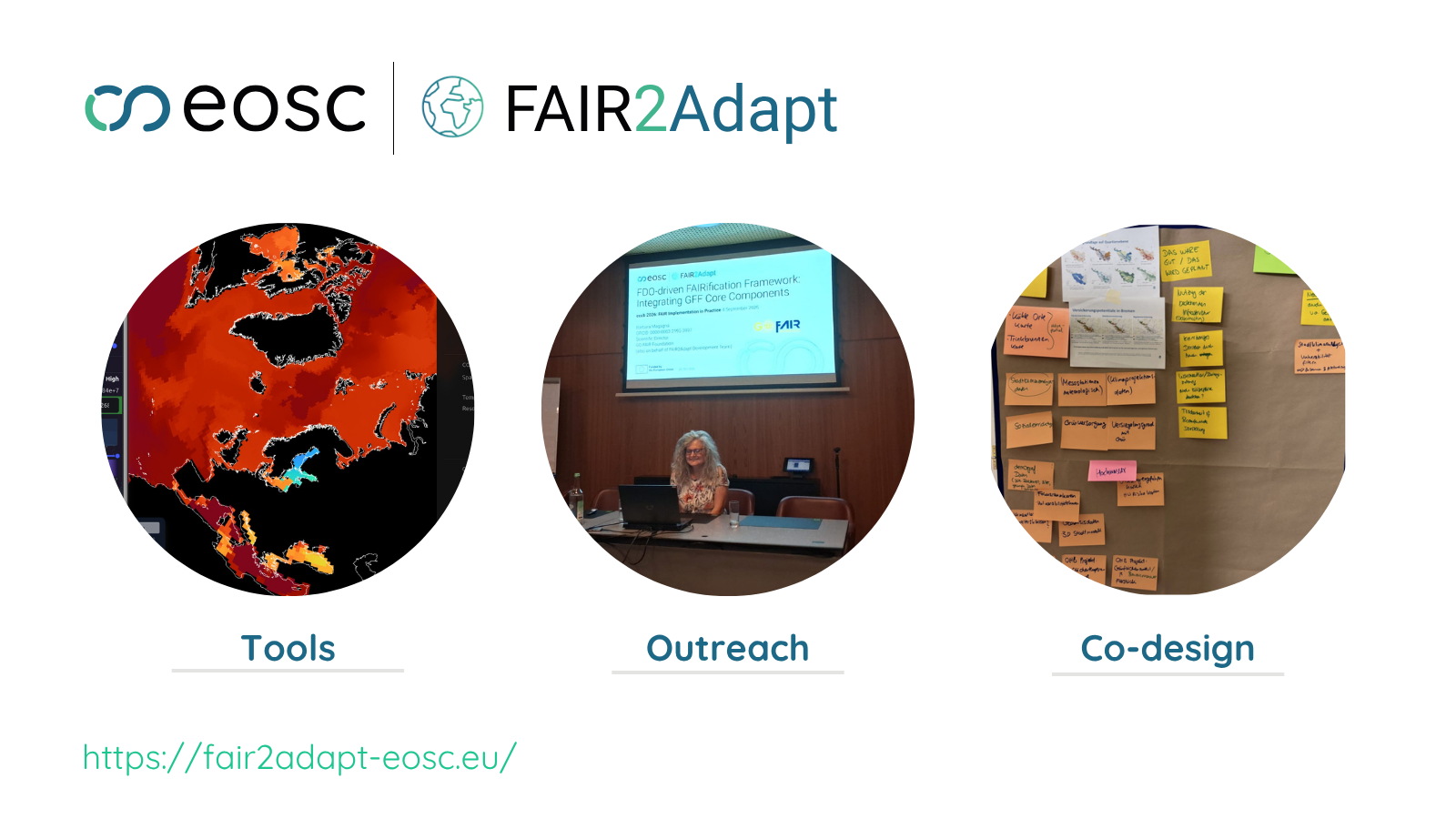
One of the summer’s most exciting developments came from our case studies. We published a fourth webinar in the FAIR Solution series, presented by Tina Odaka (Ifremer), showing how a FAIR dashboard built on the I-ADOPT framework makes high-resolution coastal ocean model outputs accessible and reusable. Watch it and the rest of the series on our YouTube channel.
Building on this, we demonstrated the dashboard’s reusability by implementing it, without modification, in our Arctic radionuclid case study. This is a concrete proof of concept for the cross-domain reusability of FAIR Digital Objects (FDOs), and is exactly the kind of result FAIR2Adapt was designed to produce: build a FAIR solution once, and apply it across multiple scientific contexts.
Co-designing AI tools with the weADAPT community
In parallel, the Case Study 5 team held a co-design workshop with the weADAPT community—a global knowledge exchange platform where thousands of practitioners, researchers, and decision-makers share knowledge on climate change adaptation worldwide. Before building AI into their platform, we asked their users directly: what do you actually need, and what are you comfortable with?
Two tools are currently in development. One is an AI chatbot for exploring weADAPT’s knowledge base, and the other is an AI-assisted tagging and metadata system to improve how resources are organised and found. The workshop surfaced several clear priorities. Users want transparency about the AI model behind the chatbot, quick feedback mechanisms to help it improve over time, and human review of AI-generated summaries. Participant feedback will directly shape the development of both tools.
Taking FAIR2Adapt to international stages
As summer drew to a close, FAIR2Adapt partners brought our work to two major international events.
Barbara Magagna (GO FAIR Foundation, FAIR2Adapt) participated in a full-day workshop at the ECCB 2026 SIB Communities Day in Geneva, where experts from ELIXIR Europe, CODATA, and SIB Swiss Institute of Bioinformatics compared FAIRification frameworks and tested cross-framework integration across biodiversity, health, and AI domains. The groups agreed to position their frameworks as complementary components of a unified FAIR ecosystem rather than competing standards. As Giovanni Nisato (Pistoia Alliance) framed it, the result is a “Dream Team” where each approach will handle a specific layer. The next step is a joint guidance paper for the research community on implementing FAIR principles in practice.
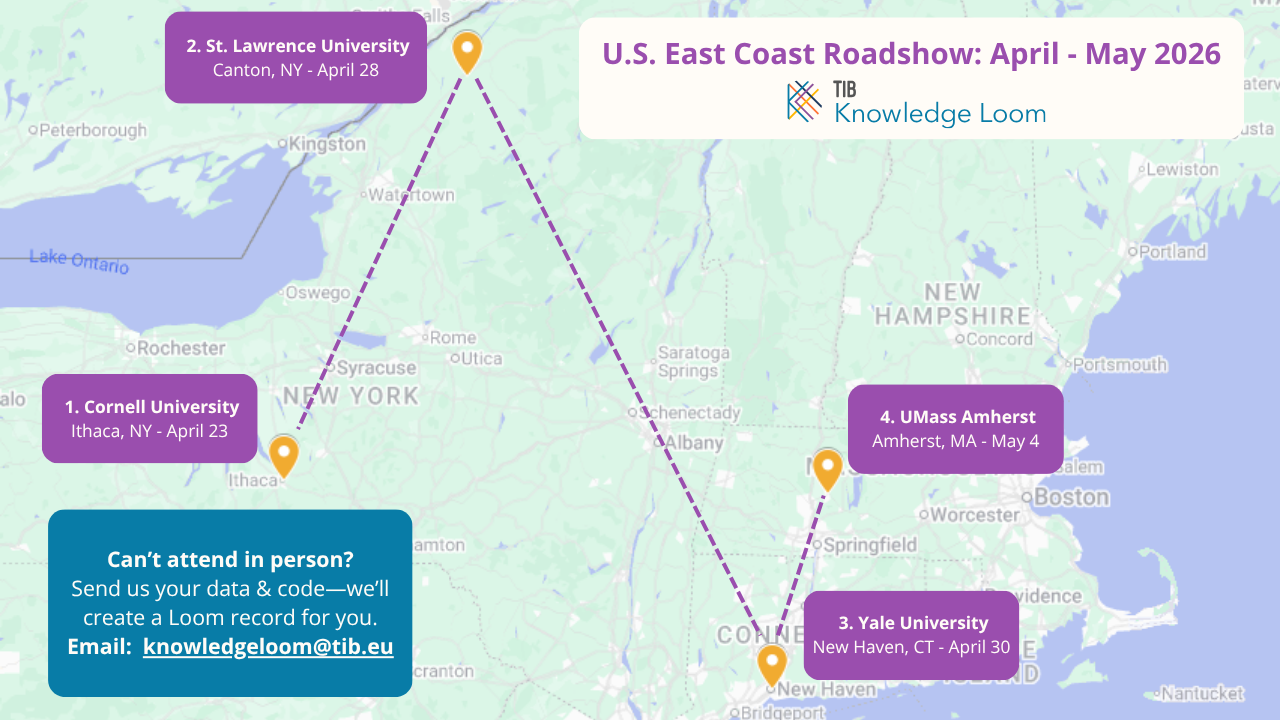
Lauren Snyder (TIB) presented the TIB Knowledge Loom—one of the core Open Science tools used in FAIR2Adapt—to the NFDI (National Research Data Infrastructure) community in a one-hour webinar, introducing the Knowledge Loom’s role as an Open Science digital library and demonstrating its new submission system to an audience of researchers, data stewards, librarians, and infrastructure specialists. Watch the recording here.
Stay connected
FAIR2Adapt has plenty more to come in the months ahead, including hosting a booth to share our FAIR Solutions and co-organising a Thematic Working Group on Climate Services at the 5th Forum for the EU Mission on Adaptation to Climate Change. Stay tuned for more information.
Explore our growing resources page, watch the full FAIR Solution webinar series, or get in touch if you are working on climate change adaptation data and want to explore how FAIR2Adapt tools could work for you.