Why we met
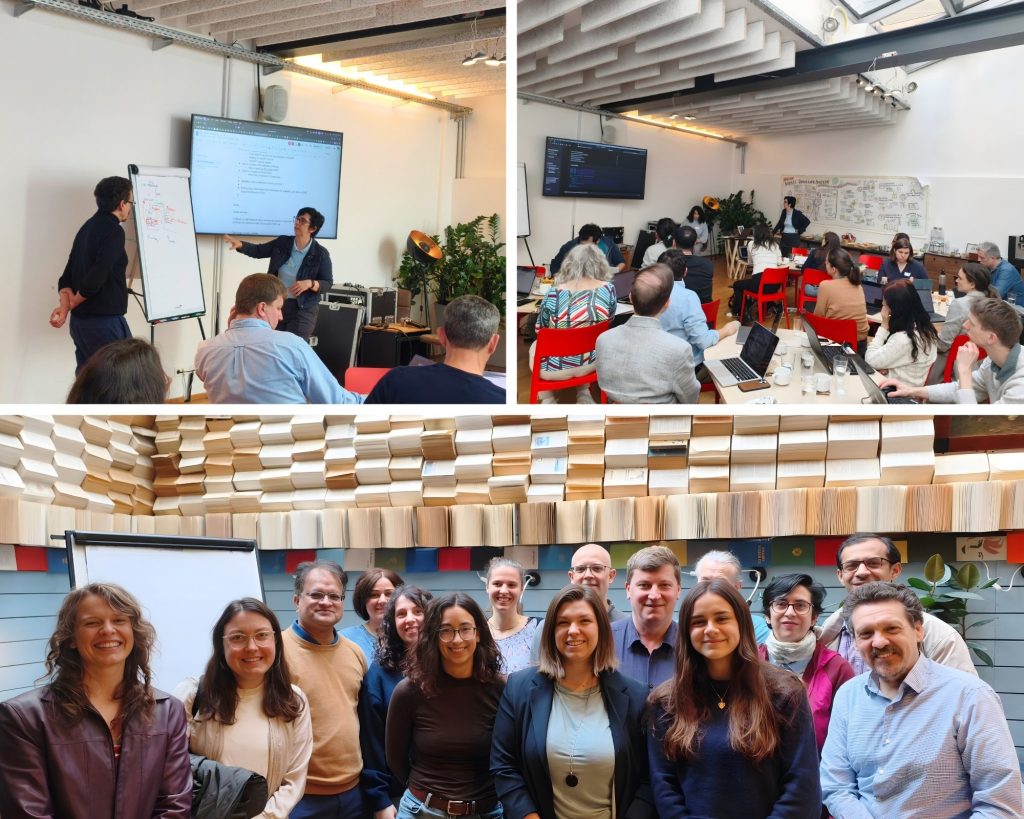
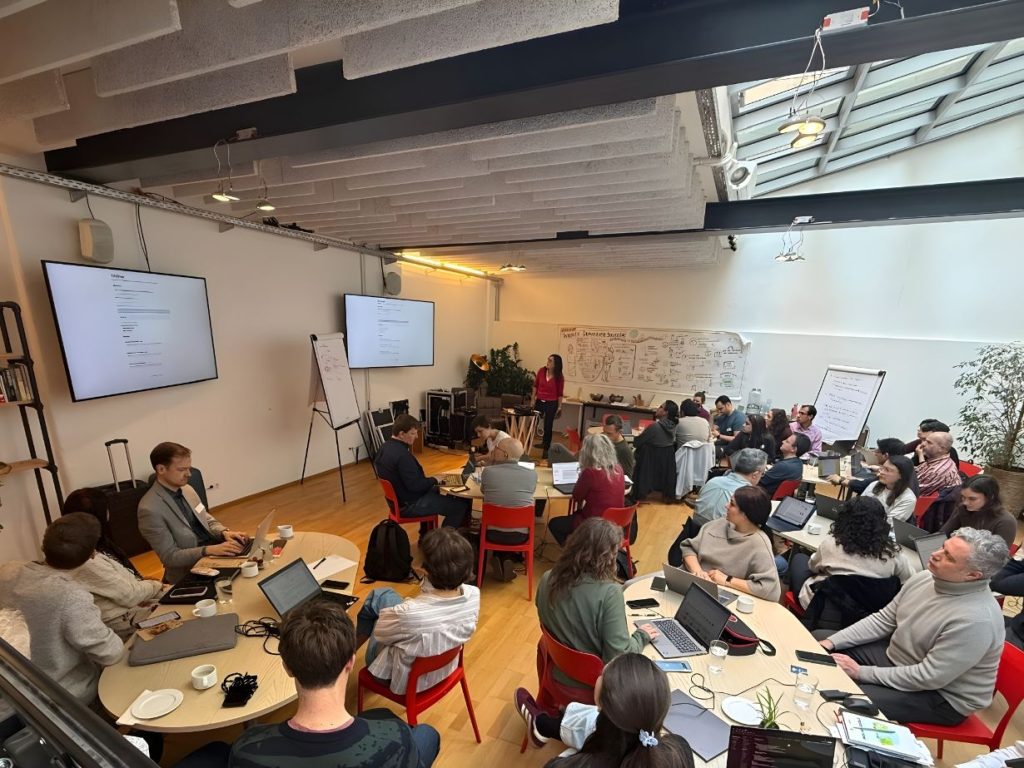
Twice a year, the FAIR2Adapt consortium comes together for a General Assembly, and for one of those meetings, we gather in person. This March, partners travelled from across Europe to Vienna for two days packed with collaboration, live demonstrations, and open dialogue. The Impact Hub Vienna was the perfect backdrop for it all, a space as collaborative as the project itself. The energy in the room was immediate, and the conversations that followed were some of the most productive the project has seen.
Day 1: Where the Real Decisions Happen
Morning: Technical alignment
The first day was reserved for the FAIR2Adapt consortium, and the morning session wasted no time jumping into the substance. A rich technical discussion quickly zeroed in on two capabilities that the project has been developing in parallel: I-ADOPT variable descriptions (GFF) and the Claims Extraction Service & FDO Enrichment Service (Expert.ai). The consensus was clear and exciting: both are important enough to be treated as first-class data in their own right, not buried as annotations inside a RO-Crate. They belong front and centre, structured as FDOs (FAIR Digital Objects: standardised, machine-actionable units of research output that can be independently referenced and reused across systems).
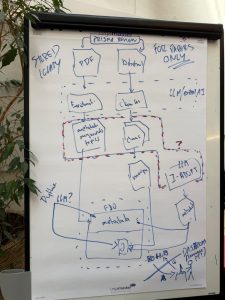
This decision has real consequences for how the whole technical stack fits together. ROHub (PSNC) and Pythia natural language search (NKUA) will both exploit these enriched structures (the I-ADOPT variable descriptions and the scientific claims extracted by the Claims Extraction Service & FDO Enrichment Service) to power a genuinely user-friendly search experience, where a user can ask a question in plain language, which is then automatically transformed into a precise, machine-readable query and run against ROHub’s knowledge graph. This replaces the need for users to understand the underlying data structure. That is a significant leap from where the project started.
The discussion also touched on the TIB Knowledge Loom (TIB), an open science digital library of scientific results linked to the analyses, data, and code used to produce them, with reproducibility as its primary aim: the Loom helps authors make their own work reproducible by structuring and publishing scientific knowledge in a machine-reusable format from the outset. Currently, scientific knowledge in the TIB Knowledge Loom is manually curated and published. While this ensures accurate, high-quality knowledge, it limits how far and fast it can scale.
But speed and automation are only part of the story. Our climate change adaptation experts were unanimous on one point: no blind publication of AI-extracted claims. Before any extracted claim is published as a nanopublication (a minimal, machine-readable unit of scientific knowledge that can be independently cited), it will be reviewed and, when needed, corrected by a human, ideally the authors of the corresponding RO-Crate in ROHub. And crucially, the published nanopublication will be fully transparent about its provenance, acknowledging that the claim was extracted by AI but reviewed and validated by a human. This is not just good practice; it is a model for responsible AI use in open science. AI accelerates the process, and humans ensure the quality and stand behind the content.
The Vienna meeting also sparked a broader conversation about credit and recognition in science, prompted by discussions around the TIB Knowledge Loom. A key question emerged: when someone reproduces, replicates, or builds upon existing work, who deserves credit for the replication, the original authors or the replicator? The argument was made that replication is work, and work deserves recognition. The people who actually perform the replication deserve authorship credit too, and the replication work should be clearly distinguished from the original work it is based on.
This is precisely what FORRT (Framework for Open and Reproducible Research Training) advocates: through their use of the CRediT taxonomy and their dedicated Replication Hub, FORRT champions fair credit for all contributors, including those who carry out replications, with a particular focus on early-career researchers who are too often overlooked in traditional authorship conventions. A related initiative worth highlighting is the Replication Research programme at the Centre for Open Science, where FORRT is also involved. Their work is a timely reminder that fixing how we credit scientific contributions is inseparable from fixing how we do science.
Afternoon: User stories, services, and looking ahead
The afternoon opened with a rapid-fire showcase of the technical services built across the work packages, before moving into one of the most productive sessions of the entire meeting: parallel breakout tracks on user stories, grouped by type of FAIR solution (a term we use in FAIR2Adapt to describe structured, reproducible, and reusable approaches to making climate change adaptation data FAIR). Crucially, these tracks focused on the case studies not selected for the public showcases the following day, ensuring every case study received dedicated attention. Case studies and facilitators reviewed their user stories together, checked which ones had been completed, identified priorities, and mapped out what still needed to be done.
The cross-case exchanges were genuinely eye-opening, with communities discovering shared challenges and potential solutions they had not previously considered. It was a fruitful, energising session that set a very productive tone for Year 2.
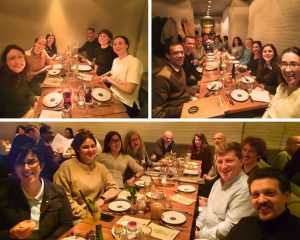
The day closed with updates on dissemination and exploitation from WP7, and by 18:00, the consortium headed to dinner at Restaurant Ulrich in Vienna’s 7th district, well earned after a full day of decisions.
Day 2: Opening the Doors
Morning: FAIR Solution Showcases
Tuesday brought a very different energy. The doors opened wide for a public event, welcoming external stakeholders, community partners, and collaborators to see what FAIR2Adapt has been building.
The morning centered on the live presentation of the four FAIR Solution Demonstrators. We will publish dedicated blog posts for each showcase, so we will not go into full detail here. But one thing deserves to be highlighted above all else: the showcases were presented by the CCA communities themselves, the case study owners, not by the technical teams who built the tools. This made an enormous difference. They brought their own reflections, context, and enthusiasm for what these solutions mean for their work. Hearing directly from the people who co-design and use these tools, whether as climate adaptation researchers building scientific methods or as practitioners applying them, was far more compelling than any technical walkthrough could have been. They were all tremendously involved and had worked incredibly hard to get here.
The showcases were recorded, and Lauren (TIB, dissemination) will be turning them into videos. Watch this space!
Afternoon: EU Mission Technical Working Group on Climate Services
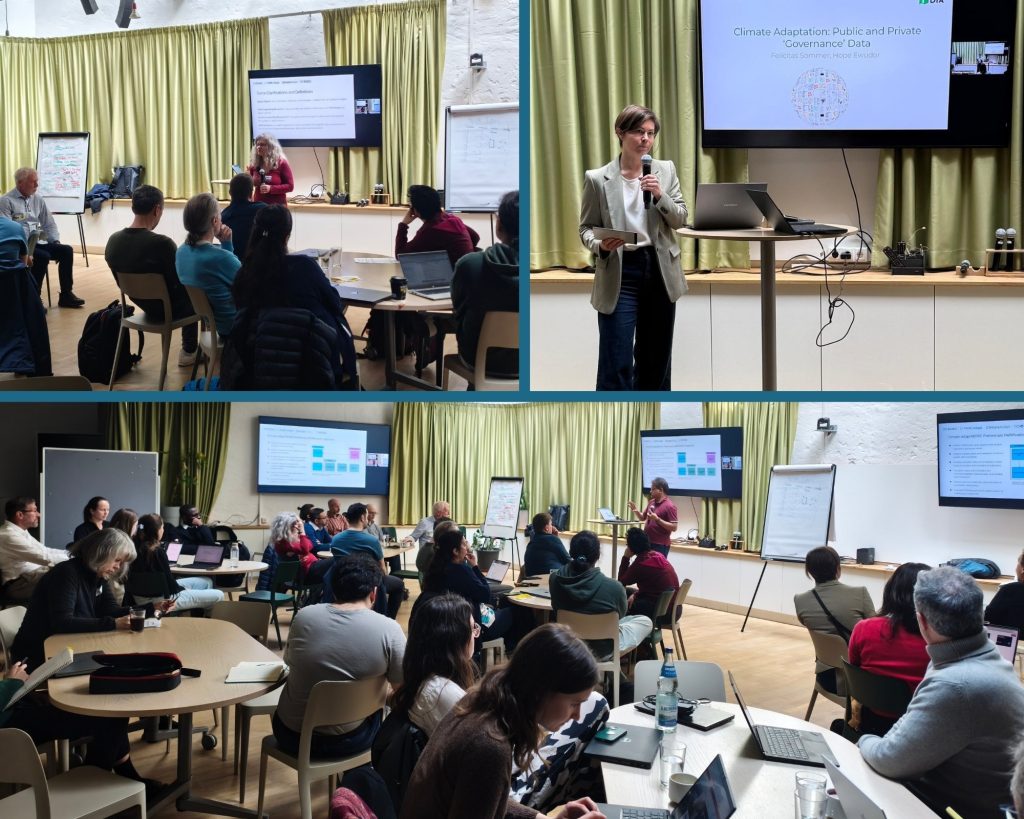
After lunch, the event shifted into a special session co-organised with our sister project Climate-Adapt4EOSC: a meeting of the Climate Services Technical Working Group (TWG) from the EU Mission on Adaptation to Climate Change. Unlike the other two days, this session was held in a hybrid format, open to a wider online audience. The goal of this working group is practical and ambitious: to build a consolidated list of FAIR Supporting Resources (FSRs) that Climate Change Adaptation communities can draw on to implement the FAIR principles in their own work.
The session featured a rich series of flash talks, each addressing a different dimension of FAIRification needs, from data quality and FAIR assessment in climate adaptation planning to structured land use information extraction, large language model (LLM)-assisted annotation services, multilingual support with AI assistance, and FAIR-supporting data access layers. The breadth of perspectives on show was a reminder of just how many pieces need to come together to make climate adaptation data truly FAIR across the full Findable, Accessible, Interoperable, and Reusable spectrum.
Late afternoon: FAIR2Adapt meets Climate-Adapt4EOSC
The final session of the public day was one of the most forward-looking of the entire meeting. FAIR2Adapt and Climate-Adapt4EOSC came together for structured parallel tracks that proved remarkably generative.
Both projects have independently developed FAIRification frameworks based on RO-Crate. Rather than treating this as duplication, the two consortia agreed to cross-apply each other’s frameworks to selected case studies. The two teams also agreed to explore the use of a common RO-Crate profile for both projects, which would further increase interoperability between them, a natural and exciting step towards a shared infrastructure for climate change adaptation data. This is a genuinely exciting validation strategy: if both frameworks are truly FAIR, they should deliver the same benefits to end-users regardless of which approach is used. The results of this cross-validation will be invaluable for the wider community.
The two projects also agreed to complement each other by adopting tools developed by the other that address gaps in their own work. For example, I-ADOPT will be taken up by Climate-Adapt4EOSC; multilingual AI support will be adopted by FAIR2Adapt; and Open Digital Rights Language (ODRL) policies for granting access to private datasets, adopted by Climate-Adapt4EOSC, will also be applied to private datasets within FAIR2Adapt. This kind of knowledge and tool-sharing between sister projects is exactly how the EOSC ecosystem should work.
The session also opened a stimulating discussion on data spaces and their relationship to FAIR. Mark Dietrich, Technical Coordinator of SAGE (the Green Deal Data Space) at Bloodstone Solutions, joined the conversation and brought a valuable first-hand perspective on how data spaces are being built in practice. The ODRL is one important part of the data space toolkit, providing a formal language for expressing data governance rules. But the broader data space vision goes further, addressing interoperability at a structural level, including how connectors, protocols, and shared governance frameworks can allow different ecosystems like EOSC and operational data spaces to work together seamlessly. For FAIR2Adapt, this is a conversation worth continuing: truly FAIR climate adaptation data should ultimately be interoperable, not just within EOSC, but across the wider European data landscape.
Concrete collaboration on case studies is already taking shape. A particularly promising avenue emerging from the TWG session concerns the FAIRification of climate adaptation planning data across national, regional, and local governance levels. The fragmentation across these levels is a real barrier to effective adaptation decision-making, and making this data machine-actionable could dramatically improve the flow of information between them. A collaboration building on the Hamburg case study is planned and has strong potential to become a transfer case.
Transfer cases have been confirmed with REGILIENCE+, and further collaborations are also taking shape. One particularly exciting prospect, discussed at the GA with Fresh Thoughts Consulting, is a transfer case around the Doñana ecosystem in Spain. This collaboration is separate from REGILIENCE+ and would extend the FAIR2Adapt framework into the biodiversity domain through our coordinating partner LifeWatch ERIC, opening up rich connections between climate adaptation and biodiversity data that could benefit communities well beyond the project. Watch out for dedicated blog posts on all of these.
Day 3: The TIB Knowledge Loom Workshop
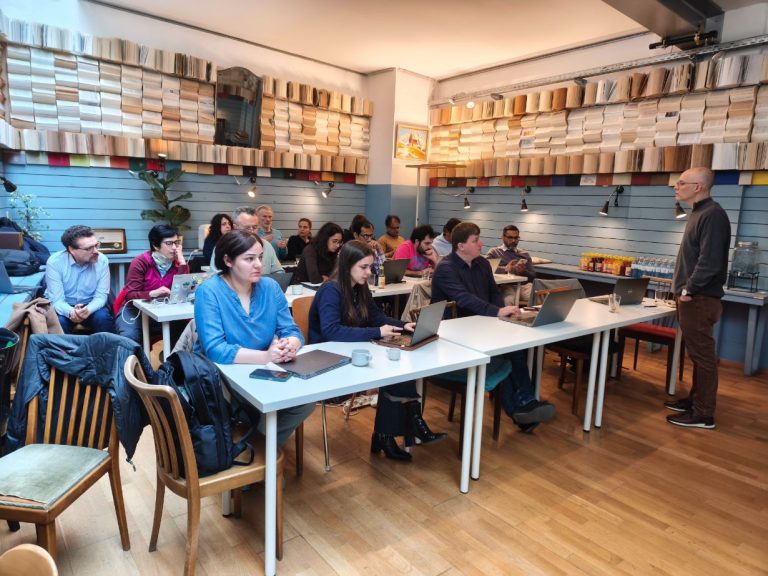
For those who could stay, Wednesday morning offered an optional TIB Knowledge Loom workshop in the Impact Hub Vienna Library Room. The room was full, and a dedicated blog post will tell that story in full!