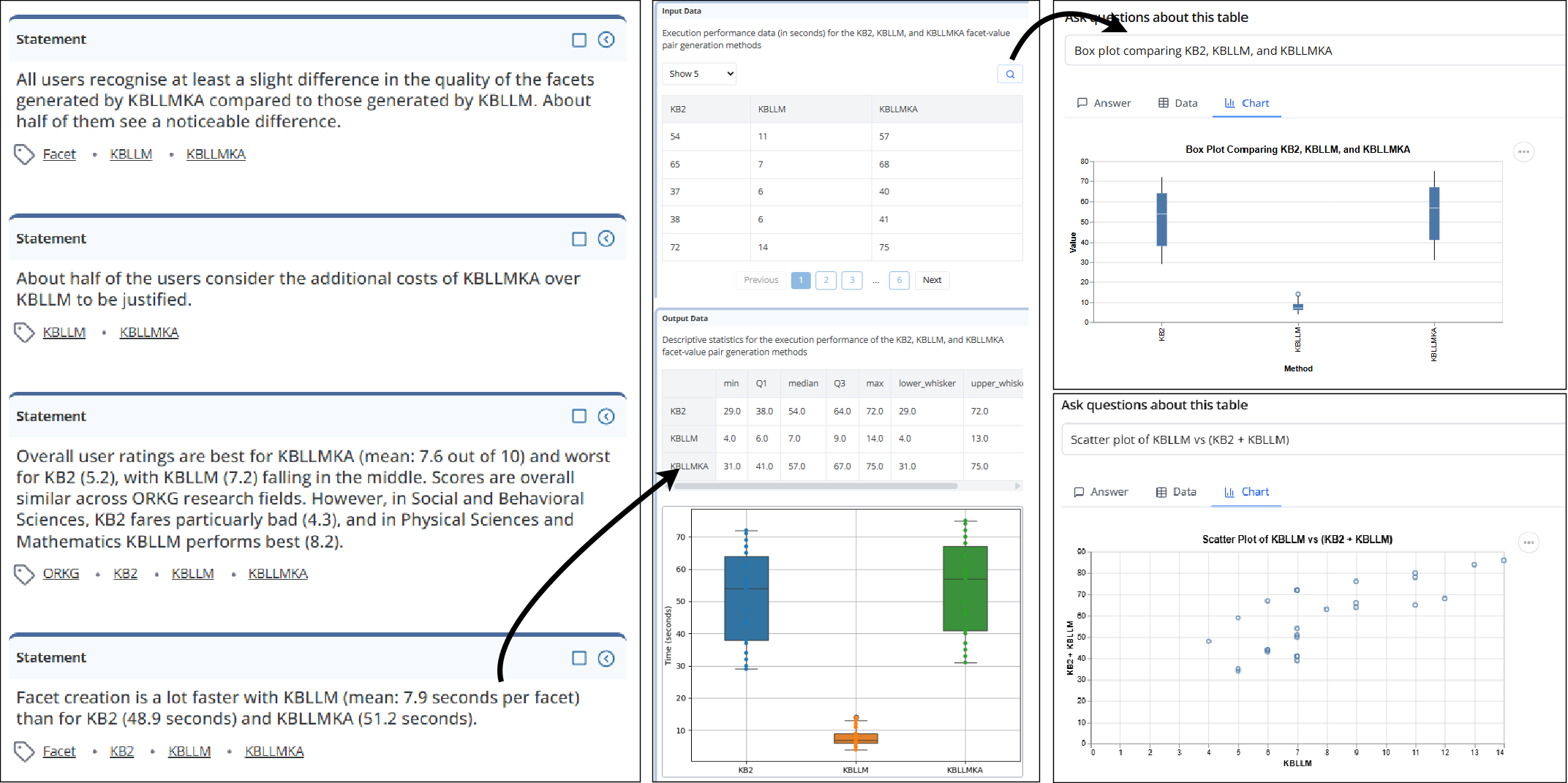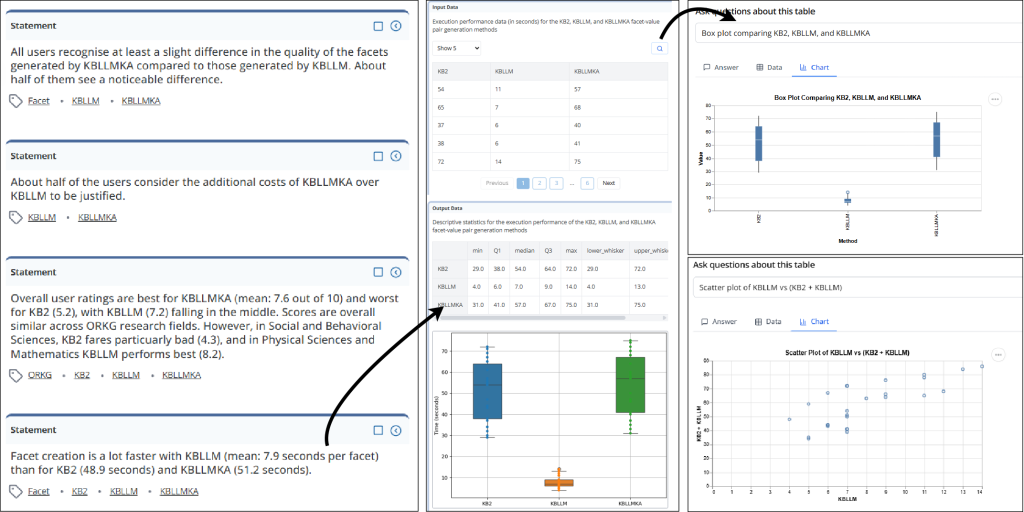
Researchers at the TIB – Leibniz Information Centre for Science and Technology developed a demonstration system that allows users to explore research data by asking questions in plain-language.
Reading a scientific article is one thing. Exploring the data behind it is another. Even when a research article provides access to its supporting datasets, answering a follow-up question often requires downloading files, understanding their structure, and writing code.
Researchers at the TIB are working to bridge this gap. A new tool, described in a paper presented at the 2026 ACM/IEEE Joint Conference on Digital Libraries (JCDL), lets users explore research data by asking questions in plain language. This work offers a practical approach to making research evidence easier to explore, visualise, and reuse.
Developed by Hadi Ghaemi, Zakieh Alizadehsani, and Markus Stocker, the tool builds on the TIB Knowledge Loom, an Open Science digital library that connects scientific statements with supporting data, code, and methods. The tool takes these connections a step further by letting users query and explore the supporting data through a plain-language question-and-answer interface. In addition to answering users’ questions, the tool allows them to explore the supporting data, view the results in tables and, where appropriate, as visualisations, and see how the results were produced.
A user might want to reproduce a reported result, compare groups within a dataset, or explore a trend the original article did not discuss. The system uses artificial intelligence (AI) to translate the question into a database query, runs it against the supporting data, and returns a table. When helpful, the tool can also visualise the data. Users can also inspect the query to see how the result was produced.
A key challenge for the AI running this tool is ensuring it consults the right data. While testing the tool, the researchers found that linking each question to the dataset associated with a specific scientific finding eliminated errors caused by the AI consulting the wrong dataset. It also improved the accuracy of the AI’s answers.
However, pointing the AI to the right dataset does not guarantee a trustworthy response. The main workflow only answered about 62–67% of questions correctly. The results highlight both the promise of easier data exploration and the continuing need for users to check whether an analysis answers their scientific question.
For researchers, the practical benefit is clear. When scientific findings are linked to their supporting data, users can explore differences, compare observations, or investigate trends through plain-language questions. Because the tool shows the database query it automatically generated to answer the question, users can inspect how an answer was produced, which supports transparency and reproducibility.
More about the study:
The study, “SciClaim2Explore: Claim-Guided Exploration of Scientific Data Evidence,” was published open access in ACM JCDL 2026. The full article is available at: https://doi.org/10.1145/3805696.3846517